summon.guideAll guides

Nassim Nicholas Taleb

Essayist, probabilist and former options trader; author of the five volume Incerto and the man who put black swan and antifragile into ordinary language.

1960–present · New York, United States, with regular time in Amioun, Lebanon

Install Nassim's frameworks in Claude Code

/plugin marketplace add adamtpang/summon.guide
/plugin install nassim-taleb

Installs 20 skills from Nassim, plus the rest of summon.guide. Source on GitHub.
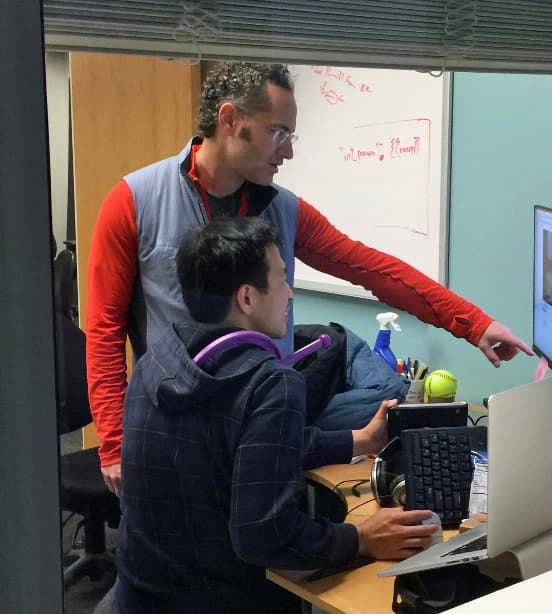
Early life and education

Nassim Nicholas Taleb was born on 12 September 1960 in Amioun, a town in the Koura district of northern Lebanon, to Nagib Taleb, a physician, oncologist and researcher in anthropology, and Minerva Ghosn. The family was Greek Orthodox of Antiochian Greek descent, part of the Levantine Christian establishment, and politically prominent across generations. His paternal grandfather, also named Nassim Taleb, sat as a supreme court judge, and both a grandfather and a great grandfather served as deputy prime ministers of Lebanon between the 1940s and the 1970s. An ancestor, Ibrahim Taleb, was a governor of Mount Lebanon in 1866. His parents held French citizenship, and he was sent to the Grand Lycee Franco-Libanais in Beirut, growing up multilingual in a country that appeared to him permanent and legible. In 1975 the Lebanese civil war broke out. Almost everyone expected it to be settled in days or weeks. It lasted fifteen years, ended Lebanon's standing as a stable Levantine centre, and stripped the family of much of its wealth and position. Taleb has returned to that experience repeatedly as the root of everything he later wrote: the experts had been confident, the experts had been wrong, and afterward their confidence was quietly revised into a tidy story that made the war look inevitable all along. He left for higher education in France, taking bachelor's and master's degrees at the University of Paris, then an MBA from the Wharton School at the University of Pennsylvania in 1983. Much later, in 1998, while already a working trader, he took a PhD in management science from Paris Dauphine under Helyette Geman, with a dissertation on the mathematics of derivatives pricing.

Career

Taleb began as a derivatives trader in December 1984 at First Boston, and spent roughly two decades in the options business across a run of institutions: Banque Indosuez, where he was chief currency derivatives trader, CIBC Wood Gundy, Bankers Trust, BNP Paribas and UBS, together with a stint as an independent pit trader on the floor of the Chicago Mercantile Exchange. He has estimated that he executed several hundred thousand options transactions over that period. The defining episode came on Black Monday, 19 October 1987, when a hedged position that the standard pricing models treated as effectively impossible paid out and made him financially independent at twenty seven. The lesson he drew was not that he had predicted the crash, which he denies, but that he had been positioned so that prediction was unnecessary. His first book, Dynamic Hedging (1997), was a technical manual for practitioners and preceded the popular work by years. In 1999 he founded the hedge fund Empirica Capital, built on the inversion of the prevailing approach: rather than collect small steady gains while carrying a hidden risk of catastrophic loss, buy cheap far out of the money options, bleed slowly and survive to collect when a crash arrives. He closed Empirica in 2004. Since 2007 he has been Distinguished Scientific Advisor to Universa Investments, the tail hedging firm founded by his former Empirica partner Mark Spitznagel, a role he describes as deliberately passive. He does not run Universa, manage its capital or trade for it. He is also a co-founder of the Real World Risk Institute, which teaches practitioners rather than academics. His academic career ran alongside and then past the trading. He joined the NYU Tandon School of Engineering in September 2008 as Distinguished Professor of Risk Engineering; NYU Tandon now lists him as Retired Distinguished Professor in the Department of Finance and Risk Engineering, with research interests in risk, tail risk, quantitative finance and applied probability. He was Distinguished Research Scholar at Oxford's Said Business School from 2009 to 2013, and has held or taught positions at the University of Massachusetts Amherst, the London Business School and NYU's Courant Institute. The technical work continued in parallel with the essays, culminating in Statistical Consequences of Fat Tails (2020), which he posted free on arXiv. The five volumes of the Incerto appeared across seventeen years: Fooled by Randomness (2001), The Black Swan (2007), The Bed of Procrustes (2010), Antifragile (2012) and Skin in the Game (2018).

Legacy and death

The Incerto is a single argument in five parts, and its terms have escaped into ordinary speech. The Black Swan sold more than three million copies and was named by the Sunday Times, in a line the publisher has quoted ever since, as one of the twelve most influential books written since the Second World War; black swan is now the standard shorthand for a rare, high consequence event that only looks predictable afterward. Antifragile supplied a word that did not exist for the thing that gains from disorder rather than merely surviving it, along with the barbell strategy, via negativa and a popular account of the Lindy effect. Skin in the Game gave a name to asymmetric accountability, the condition in which one party takes the decision and another bears the consequence. Taleb is careful to note that the black swan metaphor itself is not his invention, since it goes back to the Roman satirist Juvenal and was a standing European figure of speech; what is his is the repurposing. His standing is genuinely contested, which is close to a design goal. He has spent decades attacking Gaussian risk models and the people who use them, including a long running and public dispute with Myron Scholes, and he coined the term Intellectual Yet Idiot for the credentialed class that prescribes what others should do, eat, think and vote for while bearing none of the consequences. Critics find the manner insufferable and the mathematics contested at the edges. What has proved durable is a shift of attention rather than a forecast. Taleb does not predict, and says so; his contribution is to move the question from what is going to happen to what you are exposed to if you are wrong, to insist that survival precedes optimisation because a ruinous outcome removes you from the sample, and to demand that anyone giving advice be made to pay for being wrong. That framing is now standard vocabulary in risk management, in epidemiology and public health argument, and among founders and investors who have never opened any of the books.

Claude Code skills

Frameworks distilled from Nassim’s life, packaged as Claude Code skills. Each skill is invoked with a slash command and grounded in the primary biographies listed under References.

Via Negativa: Remove the Ruin Before You Add Anything

/nassim-taleb:via-negativa

Stop asking what to add. Find the exposure that can end you, close it, subtract everything else that is quietly harming you, then barbell what is left so the downside is capped and the upside stays open.

Source: The Incerto by Nassim Nicholas Taleb: Fooled by Randomness (2001), The Black Swan (2007), The Bed of Procrustes (2010), Antifragile (2012), and Skin in the Game (2018). Via negativa, the barbell strategy and the Lindy effect are developed in Antifragile. Ruin, ergodicity and the four feet deep river rule come from Skin in the Game.

Judge the Decision, Not the Outcome

/nassim-taleb:alternative-histories

Score choices by the full spread of histories they could have produced, not the one that happened to occur.

Source: Fooled by Randomness by Nassim Nicholas Taleb, Chapter Two, A Bizarre Accounting Method (Russian Roulette, Alternative History)

Count the Monkeys Before You Trust a Track Record

/nassim-taleb:count-the-monkeys

A great track record only means something once you know how many others tried and quietly failed.

Source: Fooled by Randomness by Nassim Nicholas Taleb, Part Two, Monkeys on Typewriters, Chapters Eight and Nine (Too Many Millionaires Next Door, It Is Easier to Buy and Sell Than Fry an Egg)

Match Your Observation Window to Your Real Signal to Noise Ratio

/nassim-taleb:match-the-observation-window

How often you check a number determines how much noise you mistake for meaning.

Source: Fooled by Randomness by Nassim Nicholas Taleb, Chapter Three, Philostratus in Monte Carlo: On the Difference Between Noise and Information, reinforced in Chapter Twelve, Gamblers' Ticks and Pigeons in a Box

Weight the Magnitude, Not Just the Odds

/nassim-taleb:weight-the-magnitude

A bet is not bullish or bearish, it is a probability times a payoff; compute the second number, not just the first.

Source: Fooled by Randomness by Nassim Nicholas Taleb, Chapter Six, Skewness and Asymmetry

Distrust the Track Record That Fits the Current Regime Too Well

/nassim-taleb:distrust-the-hot-streak

The best performer in any given market moment is often just the trait that matched this cycle, not the most skilled.

Source: Fooled by Randomness by Nassim Nicholas Taleb, Chapter Five, Survival of the Least Fit, A Review of Market Fools of Randomness Constants

Set Your Falsification Point Before You Act

/nassim-taleb:falsify-before-you-commit

Decide in advance what evidence would prove you wrong, and use data only to reject ideas, never to confirm them.

Source: Fooled by Randomness by Nassim Nicholas Taleb, Chapter Seven, The Problem of Induction, Popper's Answer, Pascal's Wager

The Black Swan Triplet Test

/nassim-taleb:black-swan-triplet-test

Before you call something a Black Swan or claim you saw it coming, run the event through the three tests that actually define one: rarity, extreme impact, retrospective predictability.

Source: The Black Swan by Nassim Nicholas Taleb, Prologue: On the Plumage of Birds

Mediocristan or Extremistan

/nassim-taleb:mediocristan-extremistan-map

Classify the domain you are measuring before you trust an average, a sample size, or a track record, because the two provinces of randomness obey opposite rules.

Source: The Black Swan by Nassim Nicholas Taleb, Chapter 3: The Speculator and the Prostitute

The Turkey Problem

/nassim-taleb:turkey-problem

Treat a long, comfortable track record as a warning sign, not a guarantee, because the turkey's confidence peaks the day before its confidence is proven wrong.

Source: The Black Swan by Nassim Nicholas Taleb, Chapter 4: One Thousand and One Days, or How Not to Be a Sucker

Guard Against the Narrative Fallacy

/nassim-taleb:narrative-fallacy-guard

Notice the moment a sequence of facts gets welded into a tidy cause and effect story, because the story always feels more true than the facts alone, and that feeling is the danger.

Source: The Black Swan by Nassim Nicholas Taleb, Chapter 6: The Narrative Fallacy

The Silent Evidence Audit

/nassim-taleb:silent-evidence-audit

Before you learn a lesson from a success story or a track record, go find the graveyard of people who did the exact same thing and are not around to tell you about it.

Source: The Black Swan by Nassim Nicholas Taleb, Chapter 8: Giacomo Casanova's Unfailing Luck: The Problem of Silent Evidence

The Ludic Fallacy Check

/nassim-taleb:ludic-fallacy-check

Before you trust a probability, a model, or a game-derived intuition about risk, check whether real life actually shares the closed, known rules of the game you learned it from.

Source: The Black Swan by Nassim Nicholas Taleb, Chapter 9: The Ludic Fallacy, or The Uncertainty of the Nerd

The Fourth Quadrant Map

/nassim-taleb:fourth-quadrant-map

Sort any risky decision by two questions, is the payoff simple or open-ended, and does this domain allow extreme outcomes, then apply the specific set of rules that survive the one dangerous quadrant.

Source: The Black Swan by Nassim Nicholas Taleb, Postscript Essay: VI, The Fourth Quadrant, and VII, What to Do with the Fourth Quadrant

Don't Tell Me What You Think, Tell Me What's in Your Portfolio

/nassim-taleb:portfolio-not-opinion

Before you act on anyone's opinion (including your own), find out what they actually have exposed to it, because unexposed advice is a sales pitch wearing the costume of counsel.

Source: Skin in the Game by Nassim Nicholas Taleb, Chapter 1, Why Each One Should Eat His Own Turtles: Equality in Uncertainty (A Customer Is Born Every Day, Talking One's Book)

The Minority Rule: How a Stubborn Few Set the Terms for Everyone

/nassim-taleb:minority-rule

Find the smallest, most inflexible group in a market or population, because a rigid minority as small as three or four percent can force the flexible majority to conform to it, not the other way around.

Source: Skin in the Game by Nassim Nicholas Taleb, Chapter 2, The Most Intolerant Wins: The Dominance of the Stubborn Minority

The Intellectual Yet Idiot Check

/nassim-taleb:intellectual-yet-idiot

Before you follow someone's confident advice about how you should live, eat, vote, or run your business, check whether they have ever had to survive the consequences of being wrong about it.

Source: Skin in the Game by Nassim Nicholas Taleb, Chapter 6, The Intellectual Yet Idiot

The Skin of Others Audit

/nassim-taleb:skin-of-others-audit

Before you trust someone's public stance, or take one yourself, map out who else's downside is riding on it (a mortgage, a child's tuition, an employer, a reputation), because that hidden leverage predicts when the stance will bend.

Source: Skin in the Game by Nassim Nicholas Taleb, Chapter 4, The Skin of Others in Your Game (A Mortgage and Two Cats, Finding Hidden Vulnerabilities)

The Green Lumber Test for Hiring and Trusting Experts

/nassim-taleb:green-lumber-test

When vetting an expert, trader, or consultant, weight their track record under real consequences over how polished, credentialed, or articulate they sound, because the skills that produce results and the skills that produce a convincing presentation are usually different skills.

Source: Skin in the Game by Nassim Nicholas Taleb, Chapter 9, Surgeons Should Not Look Like Surgeons (Looking the Part, The Green Lumber Fallacy, A BS Detection Heuristic)

The Merchandising of Virtue Test

/nassim-taleb:merchandising-of-virtue

Before you credit, or claim, a virtuous stance, check whether it actually costs the holder something, because virtue that is free to hold and advertises itself is a status purchase, not virtue.

Source: Skin in the Game by Nassim Nicholas Taleb, Chapter 13, The Merchandising of Virtue (The Virtue Merchants, Unpopular Virtue, Take Risk)

Install in Claude Code

/plugin marketplace add adamtpang/summon.guide
/plugin install nassim-taleb

Bring Nassim’s frameworks into your terminal. One install registers every guide’s skills.

Books

Each Claude Code skill above is grounded in a specific passage of a specific book. These are the primary sources we drew from for Nassim.

Notable quotes

Wind extinguishes a candle and energizes fire.
Mild success can be explainable by skills and labor. Wild success is attributable to variance.
Missing a train is only painful if you run after it!
The three most harmful addictions are heroin, carbohydrates, and a monthly salary.
If you see fraud and do not say fraud, you are a fraud.
Never cross a river if it is on average four feet deep.

References

Their voice on summon.guide is grounded in:

  • Nassim Nicholas Taleb, the Incerto: Fooled by Randomness (2001), The Black Swan (2007), The Bed of Procrustes (2010), Antifragile (2012) and Skin in the Game (2018), all Random House
  • Nassim Nicholas Taleb, Antifragile: Things That Gain from Disorder (Random House, 2012). Taleb publishes the complete prologue in the publisher's typeset form on his own site at https://www.fooledbyrandomness.com/prologue.pdf, which was read directly and used as the source for two quotations here
  • Nassim Nicholas Taleb, The Logic of Risk Taking, published by the author on Medium's Incerto publication, 25 August 2017 (https://medium.com/incerto/the-logic-of-risk-taking-107bf41029d3), the on record source for the river crossing rule later carried into Skin in the Game
  • NYU Tandon School of Engineering faculty page for Nassim Nicholas Taleb (https://engineering.nyu.edu/faculty/nassim-nicholas-taleb), the source for the Retired Distinguished Professor title in the Department of Finance and Risk Engineering
  • Wikipedia, Nassim Nicholas Taleb (https://en.wikipedia.org/wiki/Nassim_Nicholas_Taleb), for dates, family lineage, degrees, employers, academic posts and honours
  • Open Library full text search inside the scanned trade editions (https://openlibrary.org/search/inside), used to confirm that three of the quotations below occur in the named books rather than only on quotation sites

Further reading: en.wikipedia.org/wiki/Nassim_Nicholas_Taleb

Other guides